Real2Worlds2Real

Scaling Self-Improving Agentic Real2Sim2Real for Robot Manipulation

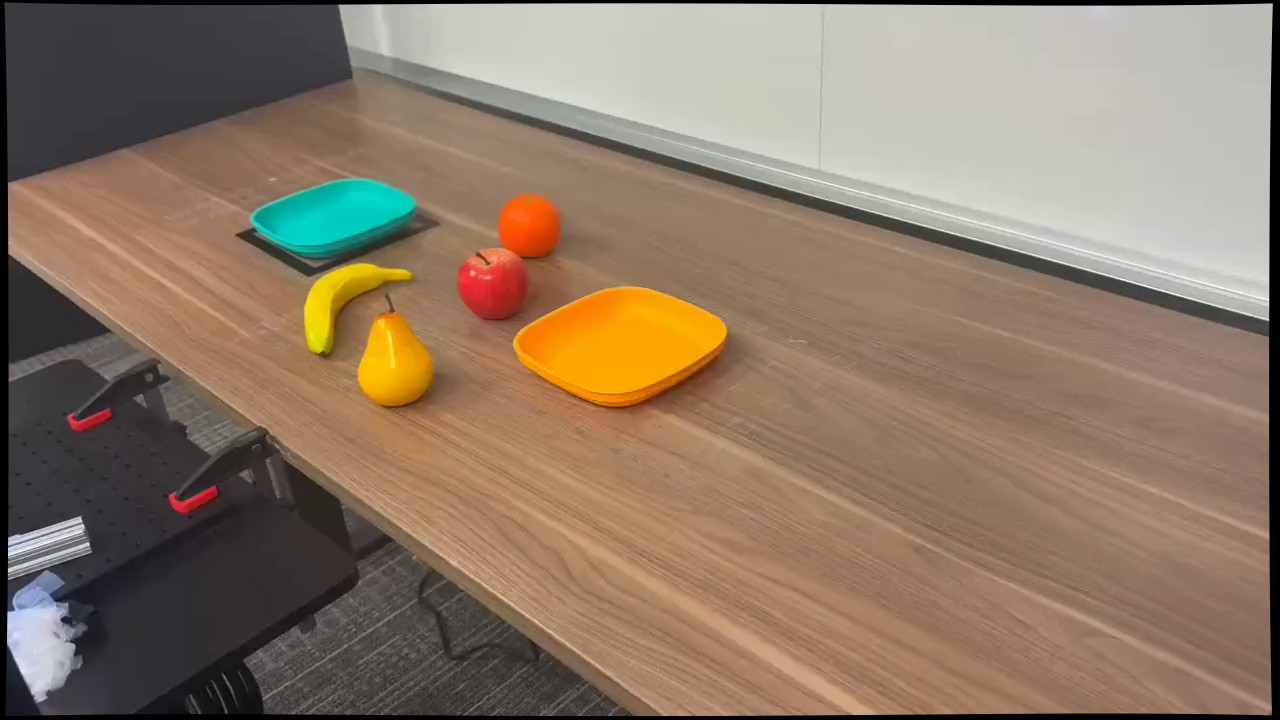
Real capture · a frame of the input video
Scroll to rebuild this scene

From RGB images or videos, the agent reconstructs a digital twin.

The agent reconstructs manipulable objects as editable 3D assets.

Every object is simulated. Drag one.

Real capture on the left, digital twin on the right.

Real captureReconstructed twin
drag rotate shift + drag move double-click reset
Capture
Room
Robot
Objects
World
Compare
Loading scene

Overview

An agentic framework connects world construction and policy development in an end-to-end Real2Sim2Real pipeline. It iteratively constructs and refines faithful digital twins and diverse, physically executable digital cousins, enabling scalable data generation and policy learning in simulation. The resulting policies are then deployed on real robots.
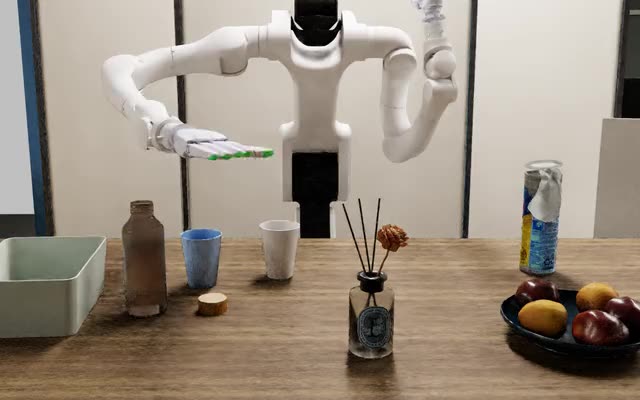
  1. 1. World buildingConstruct faithful digital twins and expand them into diverse, physically executable digital cousins.
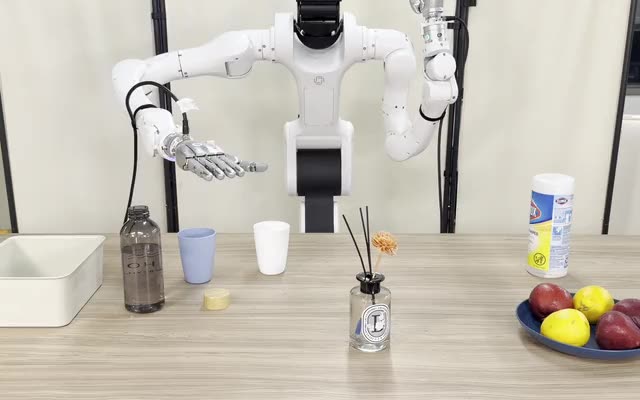
  2. 2. Policy developmentCoordinate data generation, policy learning, and refinement based on task requirements and simulation rollout feedback.
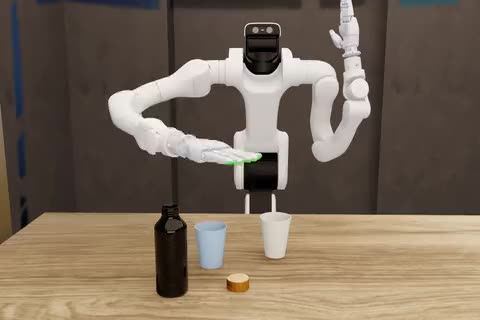
  3. 3. Self-improvementValidated procedures are distilled into reusable skills that guide subsequent tasks.
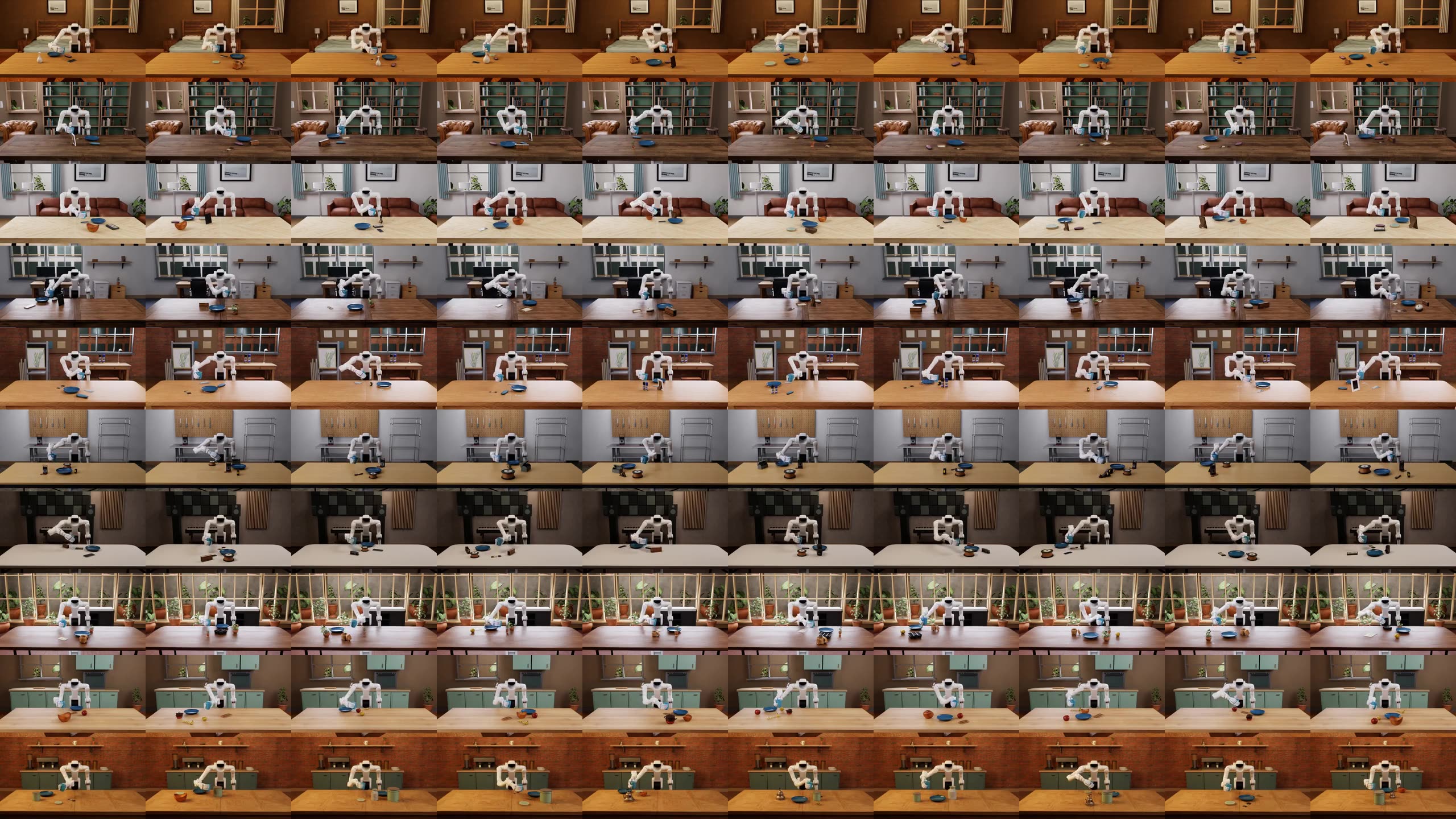
  4. 4. ScalingPerformance improves with greater world diversity, and with more interaction data.
Abstract

Scaling robot manipulation learning remains challenging due to the high cost of collecting real-world interaction data. Real-to-Sim-to-Real (Real2Sim2Real) offers a promising route by enabling policy learning in simulation grounded in real-world observations, yet scaling this paradigm across diverse tasks and physical interactions remains difficult. We introduce Real2Worlds2Real, a self-improving agentic framework that integrates scalable simulation-world construction with policy development. Given limited visual observations and task descriptions, its tool-orchestration harness enables an agent to construct faithful digital twins and expand them into diverse, physically executable digital cousins. The agent adaptively selects tools and revisits construction decisions, using visual and execution feedback to refine geometry and physical behavior. Building on these worlds, the agent orchestrates policy development by adaptively coordinating data generation, policy learning, and refinement based on task requirements and simulation rollout feedback. Across both processes, validated procedures are distilled into reusable skills, enabling accumulated experience to guide subsequent tasks. Experiments demonstrate improved world fidelity and successful real-world policy transfer, with performance gains from increasing world diversity and interaction-data volume. Skill reuse further improves world-building efficiency and long-horizon task success.

Key terms
Real2Sim2Real
Grounding simulation in limited real-world observations to scale training environments and interactions for policies that transfer to the real world.
Digital twin
A reconstruction of the observed scene that captures real-world appearance and spatial structure.
Digital cousins
Object and scene variations of the twin: modified geometry, appearance, and materials of task objects, and variations in scene layout, background appearance, and lighting.
Tool-orchestration harness
Provides a general-purpose coding agent with a shared workspace that maintains the evolving scene and results from previous operations, and lets it adaptively select tools.
Skills
Distilled procedures that describe how a problem was identified and resolved, along with the evidence supporting the correction, so that experience can guide subsequent tasks.
Video overview

2:39

Scalable Simulation World Building

Given RGB images or videos and a language description of a manipulation task, the agent uses a skill-guided tool-orchestration harness to adaptively construct and refine simulation worlds. It compares rendered views with real-world observations to identify visual discrepancies, while simulated interactions reveal failures in physical behavior.

Every image is an artifact from the agent's session for the scene at the top of this page
Execution-grounded refinementWhen validation fails, the agent uses the diagnostics to revise relevant assets or physical parameters and reruns the checks.
Reference photo
Reference photo
Attempt 1
Agentreviewing
    Agentic designAblating the two core components: w/o agent replaces agentic orchestration with a fixed pipeline, and w/o adaptive refinement removes the feedback-driven refinement loop.
    Reconstruction rendered at the reference camera
    Real reference photo
    ‹ ›
    Real photoFixed pipeline

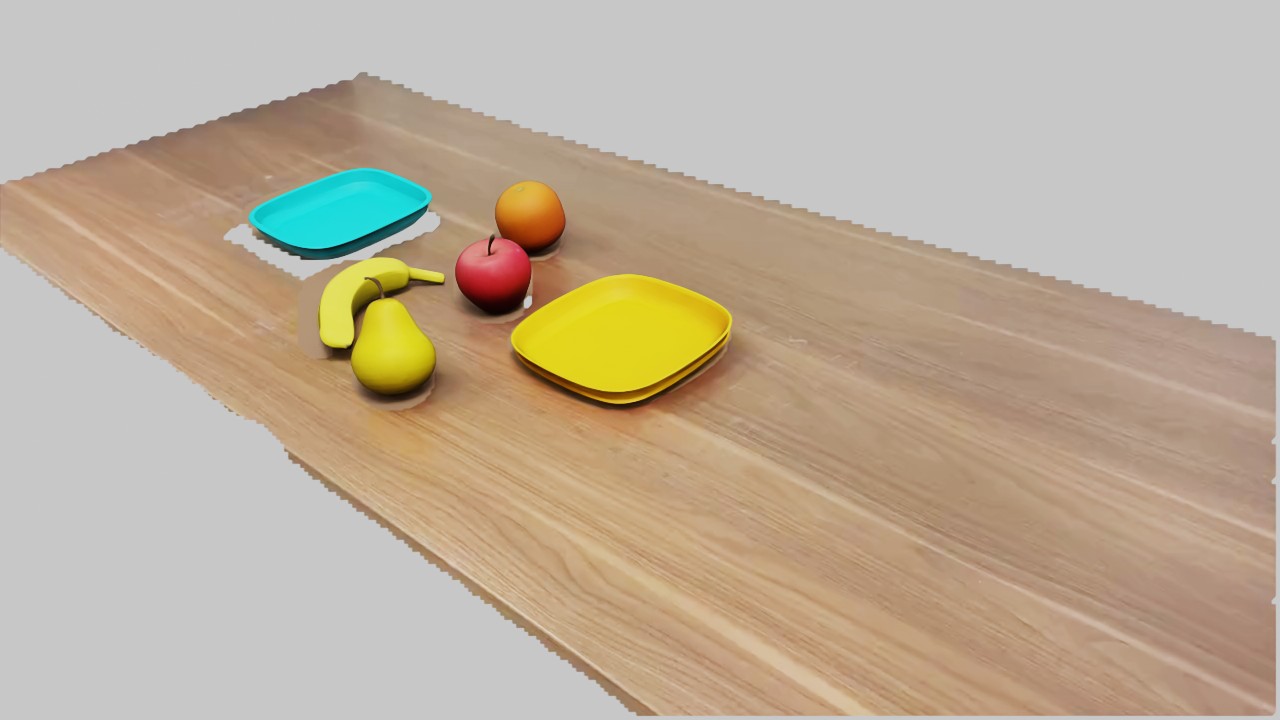
    Fruits scene, each variant rendered at the reference camera. Scores: Table 2, over real captures from Fruits, HOPE-Video, and ARKitScenes.

    World qualityTask objects in the worlds each method builds from the same input videos, and the visual, geometric, physical, and scene-level fidelity of reconstructed worlds (Table 2).

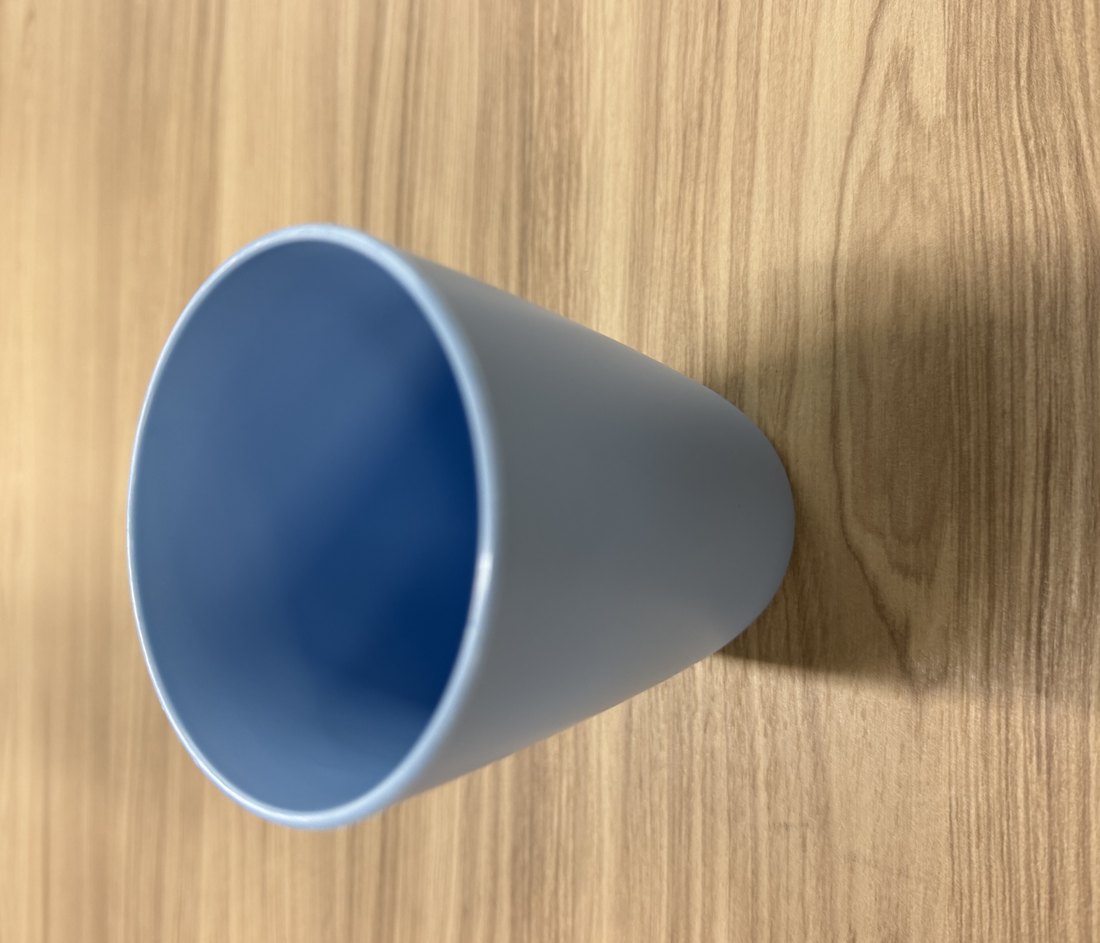
    Task objects as exported by each method, drawn with one neutral material. All Real2Sim methods use the same input videos; success rates are real-robot results over 30 trials (Table 1a).

    World quality on real scenes (Table 2). Higher is better in every column.

    Physics inference and calibrationWhen interaction recordings are available, the harness calibrates physical parameters by comparing simulated rollouts with observed real-world motion.
    4.2%parameter error
    next best 24.4%
    2.6%motion-prediction error
    next best 13.1%
    0%bound violations
    others 20–34%
    Beyond rigid objectsThe framework supports the generation and physics-based simulation of articulated and deformable objects.

    Agent-Orchestrated Policy Development

    Rather than following a fixed policy training pipeline, the agent adaptively orchestrates policy development based on task requirements and the demonstrations or policies already available. Throughout this process, feedback from simulated rollouts guides policy refinement.

    Task
    WorldSimulation worldDigital twin and digital cousins
    Agent selects tools
    EvaluateSimulated rolloutsFeedback guides policy refinement↺ refine
    DeployReal robot

    Real-world deploymentReal-world success rates on precision-demanding tasks, over 30 trials per task for each method (Table 1).

    TasksPeg insertion, cup stacking, gear insertion, tissue retrieval and wiping, bottle-cap tightening, cup lifting, cup pick-and-place, and nut tightening.

    Real-robot executions, and the same tasks in the reconstructed worlds. Success rates over 30 real-robot trials (Table 1).

    Real robot and digital twinThe real execution, replayed in the reconstructed world from the same viewpoint.
    Real robot
    Digital twin
    0:00

    Self-Improvement through Skill Reuse

    Across both processes, the agent distills validated procedures into reusable skills, allowing accumulated experience to guide subsequent world construction and policy development.

    Rebuild targetCut Lemon scene

    Held-out task. Each library extends the previous one with fruit-handling experience, a geometric-cutting skill, and a full interactive-cutting skill.

    Skill library0

    Skill compositionTheir reuse and composition enable new skills and tasks, further driving continual system self-improvement.

    Scaling Interaction Data and World Diversity

    The agent reconstructs digital twins, expands them into families of digital cousins, and iteratively validates and refines them through rendering and simulation feedback. Performance improves with greater world diversity, and with more interaction data.

    10training worlds
    17%success on 100 unseen scenes
    Stack Cups · Diffusion Policy · demonstrations fixed at 1,000 · the first 100 worlds are rendered rollouts; beyond them, variations of the reconstructed scene are rendered live in the browser
    Digital cousinsStarting from the reconstructed digital twin, the agent generates object-level variations, and further expands diversity with variations in scene layout, background appearance, and lighting.
    Twin the captured scene
    Cousin new room, table, distractors
    Cousin new room, materials, lighting
    Interaction-data and world-diversity scalingOn the representative Stack Cups task, each dimension is varied independently to assess policy performance and generalization (Fig. 4).

    World-diversity scaling

    Success on 100 unseen scenes, demonstrations fixed.

    Interaction-data scaling

    Success rates initially improve, then plateau; DAgger refinement adds gains beyond the plateau.

    Seen scenesUnseen scenes+ DAgger refinement
    Rollouts in simulationPolicy rollouts in the reconstructed worlds, across tasks and viewpoints.
    Jinzhong GuJiakai ChenXinyi CaoYan ShenHangke SuiShutian ZhengXiang XiaoHaoran LuFan XuLu ShiDaochen ShiRuihua ZhangWei ZhanMasayoshi TomizukaRuihai Wu
    @misc{real2worlds2real,
      title  = {Real2Worlds2Real: Scaling Self-Improving Agentic Real2Sim2Real for Robot Manipulation},
      author = {Jinzhong Gu, Jiakai Chen, Xinyi Cao, Yan Shen, Hangke Sui, Shutian Zheng, Xiang Xiao, Haoran Lu, Fan Xu, Lu Shi, Daochen Shi, Ruihua Zhang, Wei Zhan, Masayoshi Tomizuka, Ruihai Wu},
      year   = {2026}
    }